Rise Health & Wellness Peptides

Retatrutide (10mg)
$250.00 USD
Buy Now
Rise Health

Retatrutide is an investigational triple hormone receptor agonist developed by Eli Lilly and Company for the treatment of obesity, type 2 diabetes (T2D), and metabolic disorders. It is designed to target GLP-1 (Glucagon-like peptide-1), GIP (Glucose-dependent insulinotropic polypeptide), and Glucagon receptors to promote weight loss, improve glucose control, and enhance metabolic function.

Current Research Focus

Primary Research Areas:

1. Weight Reduction & Body Composition

  • Up to 24.2% total body weight reduction reported in 48-week Phase 2 trials
  • Reduction of visceral adipose tissue linked to cardiometabolic risk
  • Continued weight reduction beyond 48 weeks in ongoing evaluation

2. Type 2 Diabetes & Glycemic Control

  • Significant HbA1c reduction
  • Improved insulin sensitivity
  • Reduced fasting blood glucose levels

3. Metabolic Health Optimization

  • Increased energy expenditure via glucagon receptor activation
  • Reduction in liver fat (NAFLD relevance)
  • Improvement in triglyceride and cholesterol markers

4. Appetite Regulation & Satiety

  • Delayed gastric emptying
  • Enhanced satiety signaling
  • Reduced caloric intake

5. Lean Mass Considerations

  • Investigational data suggests potential preservation of lean muscle mass during fat reduction

6. Cardiovascular Risk Markers

  • Reduction in blood pressure
  • Improved vascular function indicators
  • Reduction in inflammatory markers associated with cardiometabolic disease
Mechanism of Action

Retatrutide is a triple receptor agonist targeting GLP-1, GIP, and glucagon receptors:

1. GLP-1 Receptor Agonism: Stimulates insulin secretion in response to nutrient intake, reduces glucagon release, and delays gastric emptying to enhance satiety.

2. GIP Receptor Agonism: Enhances insulin sensitivity and works synergistically with GLP-1 pathways to regulate glucose metabolism and lipid handling.

3. Glucagon Receptor Agonism: Increases energy expenditure, promotes lipolysis, and contributes to enhanced fat oxidation.

Key Research Studies

1. Substantial Weight Reduction – Phase 2 Trial

  • Study focus: 48-week randomized clinical trial in individuals with obesity
  • Key findings: Up to 24.2% reduction in body weight
  • Published in: New England Journal of Medicine (2023)

2. Enhanced Glycemic Control

  • Study focus: Effects in participants with type 2 diabetes
  • Key findings: Significant reductions in HbA1c and improved glycemic markers
  • Published in: The Lancet

3. Improvement in Liver Health

  • Study focus: Hepatic fat content analysis
  • Key findings: Up to 82% relative reduction in liver fat in Phase 2 study participants
  • Published in: Nature

4. Cardiometabolic Benefits

  • Study focus: Lipid and cardiovascular biomarkers
  • Key findings: Up to 40.6% triglyceride reduction and significant apoC-III decreases
  • Reported by: Reuters (clinical trial coverage)
Biological Effects and Benefits
Unprecedented Weight Loss:
Clinical trials show significant total body weight reduction, with continued fat loss over extended periods. Helps reduce visceral fat associated with cardiovascular and metabolic risk.
Effective Type 2 Diabetes Management:
Significantly lowers HbA1c, improves insulin sensitivity, and reduces fasting blood glucose levels to support better glycemic control.
Boosts Metabolic Health:
Increases energy expenditure, reduces liver fat, and improves cholesterol and triglyceride levels to support overall metabolic and cardiovascular health.
Biological Effects
Appetite Suppression & Improved Satiety:
Delays gastric emptying and suppresses appetite more effectively than GLP-1-only therapies, leading to improved portion control and reduced cravings.
Potential Muscle Mass Preservation:
May help preserve lean muscle mass during fat loss through glucagon receptor activation, supporting healthier body composition.
Cardiovascular Benefits:
Supports reductions in blood pressure, improves vascular function, and may lower inflammation linked to heart disease and stroke risk.

Biological Effects and Benefits


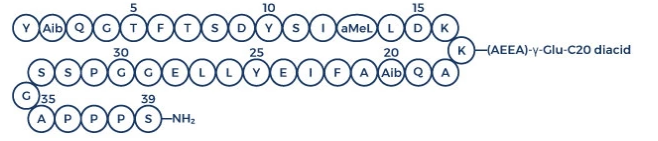
Sequence: Tyr-{Aib}-Gln-Gly-Thr-Phe-Thr-Ser-Asp-Tyr-Ser-Ile-{α-Me-Leu}-Leu-Asp-Lys-{diacidC20-gamma-Glu-(AEEA)-Lys}-Ala-Gln-{Aib}-Ala-Phe-Ile-Glu-Tyr-Leu-Leu-Glu-Gly-Gly-Pro-SerSer-Gly-Ala-Pro-Pro-Pro-Ser-NH2 (Sodium salt)

Molecular Formula: C78H121N21O23S2

Molecular Weight: 4731.33 g/mol

Related Products